
Publications
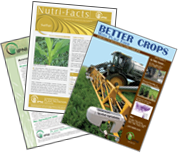
Download the Catalog of educational materials from the International Plant Nutrition Institute. The catalog is complete with order forms and instructions on ordering from IPNI.
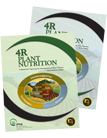
4R Plant Nutrition Manual: A Manual for Improving the Management of Plant Nutrition
The 4R Plant Nutrition Manual includes chapters on the scientific principles behind each of the four R's or "rights". It discusses adoption of 4R practices on the farm, approaches to nutrient management planning, and measurement of sustainability performance. Metric and U.S./Imperial units versions are available. 130 pages, 8.5 x 11 in. wire bound.
How to Order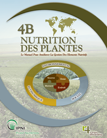
4B Nutrition Des Plantes: Le Manuel Pour Améliorer La Gestion Des Elements Nutritifs (French - 4R Plant Nutrition Manual)
Le concept 4B pour la gérance des nutriments est une nouvelle approche novatrice pour les meilleures pratiques de la gestion des engrais adoptée par l'industrie des engrais dans le monde. Cette approche tient compte des dimensions économiques, sociales et environnementales de la gestion des éléments nutritifs et elle est essentielle à la durabilité des systèmes agricoles. Le concept est simple - appliquer la bonne source d'éléments nutritifs, à la bonne dose, au bon moment et au bon endroit, mais la mise en œuvre est axée sur le savoir et la spécifique au site. Le Manuel 4B nutrition des plantes est un livre de 130 pages (8½ x 11 po.). Le livre comporte plusieurs illustrations, des modules d'apprentissage et des études de cas.
How to Order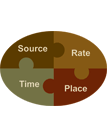
4R Plant Nutrition Manual: Supplemental Modules and Case Studies
Module and Case Study examples describe specific practices related to principles explained in the text of the 4R Plant Nutrition Manual, or provide background information supporting the principles.
Read Now
4R CCA Nutrient Management Specialist Study Guide
The International Certified Crop Adviser (ICCA) Program developed the 4R NMS (4R Nutrient Management Specialist) Certification to meet the growing demand for qualified advisers with focused knowledge and skills in nutrient management. This study guide was developed by IPNI to support the first edition of the Performance Objectives for 4R Nutrient Management Specialist.
Visit Store
4R Decision-Making Guides
Read Now
4R Plant Nutrient Management in African Agriculture
An extension handbook for fertilizer management in smallholder farming systems
Read Now
A Guide to Identifying and Managing Nutrient Deficiencies in Cereal Crops
A new booklet has been developed by the IPNI South Asia Program in cooperation with the International Maize and Wheat Improvement Center (CIMMYT). It is a 50-page field guide (8 1/2 x 11 in. size, wire-o bound) designed to describe the underlying causes of nutrient deficiencies in maize, wheat, rice, sorghum, pearl millet, and barley, with tips on how they might be prevented or remedied. Hundreds of excellent deficiency photographs provided by the authors and IPNI will allow the user of this field guide to understand the development of nutrient deficiency symptoms through the growth stages of the crop.
Read NowVisit Store
Agriculture and Culture of Costa Rica
A unique collaboration among representatives from IPNI, FAR, the University of Georgia, and other cooperators worked together in an effort to improve understanding of the interactions among agriculture, culture, and environment in Costa Rica. This 24-page, full color booklet is filled with information on history, type of soils, climate, crops, plant nutrition, geography, wildlife, and culture.
Read NowVisit Store
Be Your Own Corn Doctor
Be Your Own Corn Doctor offers growers and their advisers a practical resource showing color illustrations of typical symptoms of nutrient deficiencies, toxicities, diseases, and other disorders in crop production. While these publications do not substitute for diagnostic tools such as plant tissue analysis and soil testing, they can help distinguish and identify various field problems.
Read NowVisit Store
Be Your Own Cotton Doctor
Be Your Own Cotton Doctor offers growers and their advisers a practical resource showing color illustrations of typical symptoms of nutrient deficiencies, toxicities, diseases, and other disorders in crop production. While these publications do not substitute for diagnostic tools such as plant tissue analysis and soil testing, they can help distinguish and identify various field problems.
Read NowVisit Store
Be Your Own Soybean Doctor
Be Your Own Soybean Doctor offers growers and their advisers a practical resource showing color illustrations of typical symptoms of nutrient deficiencies, toxicities, diseases, and other disorders in crop production. While these publications do not substitute for diagnostic tools such as plant tissue analysis and soil testing, they can help distinguish and identify various field problems.
Read NowVisit Store
Best Management Practices for Turf and Lawn Fertilization
Lawns and other turf areas provide many benefits to humans. There are several factors and practices that go into the establishment and maintenance of a quality lawn, including appropriate and adequate nutrition through application of BMPs and the principles of the 4Rs - right source, at the right rate, right time, and right place.
Visit StoreBetter Crops With Plant Food
Few publications available today can claim the longevity of Better Crops with Plant Food (BC), the quarterly publication of IPNI. The magazine originated in 1923. It's not easy to describe this unique magazine. With an identity somewhere between an agronomic research journal and a marketing information series, BC provides a steady vehicle for reporting news from research related to nutrient management. While constantly evolving to serve its target audiences, the magazine also serves as a mirror of the agronomic research and education programs of the Institute.
Read NowBetter Crops China (BCC)
Established in 1998, Better Crops China (BCC) is a fully Chinese language publication from IPNI China Program. It is now released twice annually every May and October. BCC is written in Chinese language to promote good agronomic practices - proper and efficient use of inorganic fertilizer with economic and environmental considerations. The regular issue has a circulation of over 8,000 copies distributed throughout China. There is no charge for this technical publication.
Read NowBetter Crops South Asia
Following a similar style as our popular quarterly publication, Better Crops with Plant Food, this new publication (formerly Better Crops India) is the result of considerable effort by the IPNI South Asia Programme Staff: Dr. K. Majumdar and Dr. T. Satyanarayana. In these pages, you will learn of the many challenges and opportunities as well as the notable progress related to crop production, more balanced fertilization, and best/beneficial management practices related to nutrient use in South Asia.
Read NowBetter Crops International (BCI)
ARCHIVE - DISCONTINUED. Better Crops International (BCI) was published two times each year from 1996-2003 by the Predecessor of IPNI, the Potash & Phosphate Institute of Canada (PPIC) and the Potash & Phosphate Institute (PPI). BCI was intended primarily for agricultural leaders and scientists working in agronomy and related sciences outside North America.
Read Now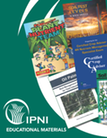
Catalog of Publications
Catalog of educational materials from the International Plant Nutrition Institute. The catalog is complete with order forms and instructions on ordering from IPNI.
Read Now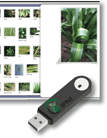
Crop Nutrient Deficiency Image Collection
Our collection of nutrient deficiency symptoms from research plots, farm fields, plantations, diagnostic labs, and our annual contest. The images are organized in groups including primary nutrients, secondary nutrients, and micronutrients. The image galleries and search results can be narrowed by crop-type. Text and diagrammatic descriptions of nutrient deficiency are also available as supporting information. Languages included in collection are: English, Español (Spanish), Français (French), Português (Portuguese), Русский (Russian), and 中國的 (Chinese-Mandarin)
Read NowVisit Store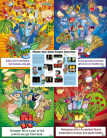
Essential Nutrients 5-piece Poster Set
Four new colorful 18 x 24-inch posters printed on glossy paper illustrating the foods we need to eat to provide our bodies with N,P, K and S are now available (can only be purchased as a set). In addition, receive the "Plants Need Proper Nutrition" poster when you order this set. These posters are a great addition to any classroom to spark discussions on healthy eating habits.
Visit Store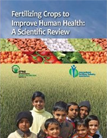
Fertilizing Crops to Improve Human Health: A Scientific Review
The International Plant Nutrition Institute (IPNI) and International Fertilizer Industry Association (IFA) have joined to produce a scientific review that is comprised of 11 chapters within three themed sections including: Food and Nutrition Security, Functional Foods, and Risk Reduction. 290 Pages, 6 x 9 in.
Read NowVisit Store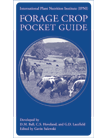
Forage Crop Pocket Guide
A practical guide to forage production that anyone can read and understand. This booklet is packed with useful facts and reference lists related to plant characteristics, fertilizer and nutrients, stand establishment, animal requirements, grazing, and forage quality, including hay and silage. It was developed by the authors of the book, Southern Forages. 56 pages 3.5 x 6 in.
Visit Store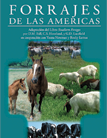
Forrajes De Las Américas (Spanish translation of Southern Forages)
The book is a translation and adaptation of the 4th edition of the popular textbook Southern Forages
Visit Store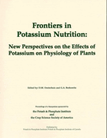
Frontiers in Potassium Nutrition
This 174-page, 20-chapter publication includes papers from a 1996 symposium sponsored by PPI-PPIC and the American Society of Agronomy. The first section covers basic perspectives focusing on how potassium movement across plant cell membranes and within the plant is both facilitated and regulated and also how potassium status interacts with basic aspects of cell function. The second section focuses on developing a new and fuller understanding of how potassium nutrition and cultural management interact with crop plant performance and quality factors.
Read Now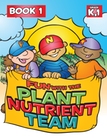
Fun with the Plant Nutrient Team - Book 1
Book 1 for Grades K-1. These 16-page activity books introduce plant nutrients, as characters in a variety of activities such as dot-to-dot, word puzzles, coloring, mazes, matching pictures, and experiments.
Read NowVisit Store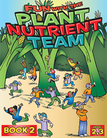
Fun with the Plant Nutrient Team - Book 2
Book 2 for Grades 2-3. These 16-page activity books introduce plant nutrients, as characters in a variety of activities such as dot-to-dot, word puzzles, coloring, mazes, matching pictures, and experiments.
Read NowVisit Store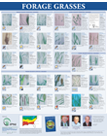
Grass and Legume Posters
The authors of Southern Forages have created two full-color posters: 1) Forage Legumes and 2) Forage Grasses. Each poster includes 30 photos with seed drawings and descriptions. Appropriate for classrooms, dealerships, seed stores, or on the farm. 24 x 30 in. Note: There is an increase in shipping costs if sent in a tube rather than folded. Please specify when ordering.
Visit StoreInformaciones Agronómicas de Hispanoamérica (Argentina, Bolivia, Chile, Paraguay, Uruguay)
A quarterly magazine where you can find technical information about the management and dynamics of N, P, K, S and other nutrients in farming systems of the region.
Read NowInformaciones Agronómicas de Hispanoamérica (Northern Latin America, Mexico and Central America)
A quarterly magazine where you can find technical information about the management and dynamics of N, P, K, S and other nutrients in farming systems of the region. (Colombia, Costa Rica, Cuba, Dominican Republic, Ecuador, Jamaica, Panama, Peru, Puerto Rico, Venezuela, Mexico, Belize, Guatemala, Honduras, El Salvador, Nicaragua)
Read NowInformações Agronômicas (Brasil)
A quarterly magazine where you can find technical information about the management and dynamics of N, P, K, S and other nutrients in farming systems of the region.
Read NowIPNI Insights
IPNI Insights is a regional newsletter published by the International Plant Nutrition Institute (IPNI).
Read Now
Issue Review Series
This series includes in-depth, critical reviews by IPNI Scientists on current issues related to plant nutrient science.
Read Now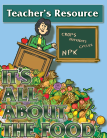
It's All about the Food
It’s All about the Food is a teaching resource that contains exciting lessons for middle grade students (fifth through eighth grades); the emphases in each lesson are on problem solving and critical thinking. Lessons are referenced to the National Science Education Standards and contain background information, step-by-step procedures for the teachers, lists of materials, and “Procedure Checklist” and “Data and Conclusions” handouts for the students. The book is filled with lessons about the nitrogen cycle, photosynthesis, how plant nutrition affects the foods we eat, a board game, and problem-solving adventures.
Read NowVisit Store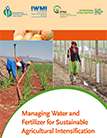
Managing Water and Fertilizer for Sustainable Agricultural Intensification
A reference guide to improve general understanding of the best management practices for the use of water and fertilizers throughout the world to enhance crop production, improve farm profitability and resource efficiency, and reduce environmental impacts related to crop production.
Read NowVisit Store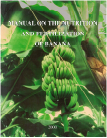
Manual on the Nutrition and Fertilization of Banana
This publication emphasizes modern concepts of soil fertility and mineral nutrition in banana production, particularly diagnostic procedures which allow for the development of practical fertilizer recommendations for high yields. It summarizes information generated from more than 15 years of work conducted by the Costa Rican Banana Growers Association. It is presented from a perspective of efficient and economic use of mineral fertilizers and an objective evaluation of organic amendments and their contribution to the susceptibility of the banana production system. The manual is available both in English and Spanish, popular with a range of readers including farm managers, researchers, technicians, students, and others. 54 pages 8.5 x 11 in.
Visit Store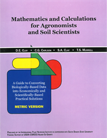
Mathematics and Calculations for Agronomists and Soil Scientists (Metric) - English
The goal of this manual is to teach individuals, whether students or working professionals, how to propose, test, and implement innovative strategies that increase productivity while also protecting the environment. The ability to integrate mathematics and technological advances into decisions requires a basic understanding of the scientific method, and understanding of how to develop and test conceptual and mathematical models. This manual is loaded with sample questions and exercises. 200+ pages, 8/5 x 11 in. spiral bound.
Visit Store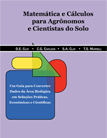
Mathematics and Calculations for Agronomists and Soil Scientists (Metric) - Portuguese Translation
Read NowVisit Store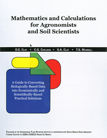
Mathematics and Calculations for Agronomists and Soil Scientists (U.S./Imperial) - English
A Guide to Converting Biologically-Based Data into Economically and Scientifically-Based Practical Solutions The overall goal of this manual is to teach individuals - whether students or working professionals - how to propose, test, and implement innovative strategies that increase productivity while also protecting the environment.
Visit Store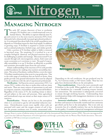
Nitrogen Notes
A basic understanding of the reactions of nitrogen in soils provides a solid foundation for making wise nutrient stewardship decisions. This series of fact sheets, written by IPNI staff, covers the major nitrogen fertilizer transformations that occur in crop production.
Read Now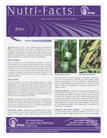
Nutri-Facts - North American Edition
A series of fact sheets written by scientific staff of the International Plant Nutrition Institute (IPNI) that is focused on essential plant nutrients and their use.
Read Now
Nutri-Facts - Arabic Edition
A series of fact sheets written by scientific staff of the International Plant Nutrition Institute (IPNI) that is focused on essential plant nutrients and their use.
Read Now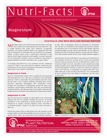
Nutri-Facts - Australia & New Zealand Edition
A series of fact sheets written by scientific staff of the International Plant Nutrition Institute (IPNI) that is focused on essential plant nutrients and their use.
Read Now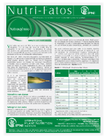
Nutri-Facts - Brazil Edition
A series of fact sheets written by scientific staff of the International Plant Nutrition Institute (IPNI) that is focused on essential plant nutrients and their use.
Read Now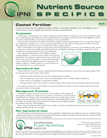
Nutrient Source Specifics (English)
Nutrient Source Specifics are one-page fact sheets highlighting various fertilizers and nutrient sources. Written by IPNI scientific staff, these items are primarily for educational use by a non-technical audience. Consult with a local expert regarding specific recommendations on nutrient use.
Read Now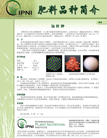
Nutrient Source Specifics (Chinese)
是用一页纸简要清晰地介绍现代农业中常用肥料品种的生产、化学性质和农用措施。这些材料由国际植物营养研究所(IPNI)的科学家们撰写,是对非专业技术人员进行教育和培训的优质教材
Read Now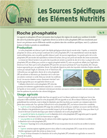
Nutrient Source Specifics (French)
Vous cherchez de brèves informations sur la production, l'utilisation agricole, les pratiques de gestion et les propriétés chimiques des engrais couramment utilisés? Les sources spécifiques des éléments nutritifs sont présentées sous forme de fiches d’une page mettant en évidence différents engrais et sources d’éléments nutritifs. Rédigés par les scientifiques de IPNI, ces articles sont principalement destinés pour un usage éducatif à des lecteurs non spécialistes du domaine. Consultez un expert local concernant des recommandations spécifiques sur l'utilisation des éléments nutritifs.
Read Now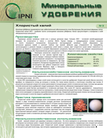
Nutrient Source Specifics (Russian)
Read Now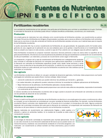
Nutrient Source Specifics (Spanish)
Está buscando información resumida de la producción, uso agrícola, prácticas de manejo y propiedades químicas de los fertilizantes químicos más conocidos? Las fichas técnicas Fuentes de Nutrientes - Específicos, son páginas individuales que resaltan varios fertilizantes y fuentes de nutrientes. Escritas por personal científico del IPNI, se enfocan principalmente para uso educacional dirigido a una audiencia general. Para recomendaciones específicas de su uso, por favor consulte con su agrónomo o especialista local.
Read Now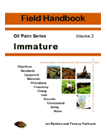
Oil Palm Series - Field Handbook: Immature
Handbook for personnel in charge of plantation development. Includes guidelines on land preparation for planting (surveying, land clearing, platform construction, legume cover) and procedures for immature maintenance (weeding, nutrient management and census activities).
How to Order
Oil Palm Series - Field Handbook: Mature
Handbook for personnel in charge of operations in mature plantings. Topics cover harvesting and delivery efficiency, weeding, nutrient management, mulching with empty fruit bunches, canopy management and pruning, and to a lesser extend pest and diseases.
How to Order
Oil Palm Series - Field Handbook: Nursery
Handbook for personnel in charge of nursery management. Includes specific instructions and information on site selection and preparation, irrigation, transplanting, monitoring seedling performance and deficiency symptoms.
How to Order
Oil Palm Series - Pocket Guide: Immature
This pocket-sized edition of the Immature Handbook contains all relevant information needed by field staff to implement best management practices related to land preparation for planting and procedures for immature maintenance.
How to Order
Oil Palm Series - Pocket Guide: Mature
This pocket-sized edition of the Immature Handbook contains all relevant information needed by field staff to implement best management practices in mature plantings.
How to Order
Oil Palm Series - Pocket Guide: Nursery
This pocket-sized edition of the Nursery Handbook contains all relevant information needed by field staff to implement best management practices in oil palm nurseries.
How to Order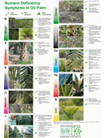
Oil Palm Series - Poster: Nutrient Deficiency Symptoms in Oil Palm
Poster with pictures for the identification of nutrient deficiency symptoms in oil palm including brief descriptions of likely environments in which they occur.
How to Order
Oil Palm Series: Management for Large and Sustainable Yields
The advent of precision agriculture and new oil palm planting materials have made it necessary to provide planters with the latest information on oil palm management. This book provides an in-depth discussion on every aspect of oil palm management — from botany to nutritional needs, from managing the canopy to precision management using GIS.
How to Order
Oil Palm Series: Nutrient Disorders and Nutrient Management
Pocket guide providing essential and up-to-date information on leaf sampling, quantitative surveys on deficiency symptoms, and other important guidelines related to nutrient management. Includes a large annex with pictures of nutrient deficiency symptoms.
How to Order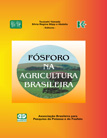
Phosphorus in Brazilian Agriculture
Proceedings of the Brazilian Symposium on Phosphorus in Agriculture held in 2003.
Read Now
Plant Food Uptake Pocket Cards
Handy, pocket-size cards list nutrient needs of crops at various yield levels and the amounts removed in crop harvest. Indicate your choice by region. (North America)
How to Order
Plant Nutrient Use in North American Agriculture (Producing Food and Fiber; Preserving the Environment; Integrating Organic and Inorganic Sources)
This download contains a pdf of the report, a PowerPoint of most figures, and Excel worksheets.
Visit StorePlant Nutrition Today
Read Now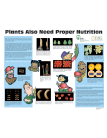
Plants Also Need Proper Nutrition (Poster)
Reprinted from the center pages of the booklet titled There's WHAT in My Food? This 18 x 24-inch poster can help educate and entertain your audience. Printed on glossy paper, the poster shows and tells examples of how important proper nutrition is for producing quality foods and crops. Place it on an exhibit, a wall, or a counter... children as well as adults will look and read.
Read NowVisit Store
Power Point Slide Set: 4R Plant Nutrition Manual
This slide set is comprised of nine chapters that correspond with the 4R Plant Nutrition Manual. Approximately 260 slides in total.
Visit Store
Power Point Slide Set: Fertilizer BMPs for Cotton in the Midsouth and Southeast
This download contains a PowerPoint presentation. (27 slides with notes pages)
Visit Store
Power Point Slide Set: Fertilizer Technology
This series of four presentations discuss mining, production, and related technology required for making fertilizers. Each presentation includes extensive speaker notes to supplement the slides. Each presentation has 40 to 50 slides (171 slides total).
Visit Store
Power Point Slide Set: International Soil Fertility Manual
This download contains PowerPoint presentations for all 10 chapters of the International Soil Fertility Manual. Approximately 320 slides.
Visit Store
Power Point Slide Set: Soil Acidity Evaluation and Management
This download contains a PowerPoint presentation (30 slides with speaker’s notes). The presentation is designed as a supplementary resource for the booklet.
Visit Store
Power Point Slide Set: Soil Fertility Manual
The Soil Fertility Manual PowerPoint slide sets for all 11 chapters are included on this CD. This set is very useful for teaching situations. Approximately 350 color slides.
Visit Store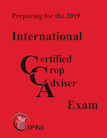
Preparing for the International Certified Crop Adviser (CCA) Exam
The Certified Crop Adviser (CCA) Exam is based on performance objectives which can be thought of as areas of expertise that a CCA should possess. This manual is an excellent study guide for use while preparing for the International CCA Exam. 157 pages. 8.5 x 11 inches.
Visit Store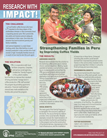
Research with Impact
The Research with Impact series highlights case study examples of solution-driven research supported by IPNI.
Read Now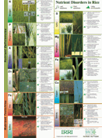
Rice Series - Poster: Nutrient Disorders in Rice
Poster with pictures for the identification of nutrient deficiency symptoms in rice including brief descriptions of likely environments in which they occur.
How to Order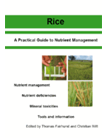
Rice Series: Rice - A Practical Guide to Nutrient Management
Since its first introduction in 2002, this Practical Guide became the standard referece for developing site-specific nutrient management (SSNM) recommendations in irrigated and favorable rainfed rice. The SSNM approach has been successfully evaluated in a wide range of farmers' fields in Asia and is now promoted by national agencies in many Asian countries. The Guide includes a large annex with pictures of nutrient deficiency symptoms.
How to Order
Russian Newsletter
Read Now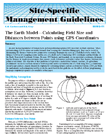
Site-Specific Management Guidelines
The objective of the Site-Specific Management Guidelines series is to provide a mechanism to assemble expert knowledge in a timely fashion on site-specific management in a form useful to farmers and their advisers. Each Guideline addresses a specific issue related to site-specific soil and crop management. Currently there are 45 titles in the series, which can be accessed from the list below.
Read Now
Soil Acidity Evaluation and Management
On soils where acidity limits crop yields, identification and correction of soil acidity constitutes an important part of best management practices to achieve sustainability. This booklet provides a concise review of key concepts related to soil acidity, its evaluation and control through various management options. 30 pages, 8 1/2 x 11 in., wire-o bound.
Read NowVisit Store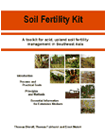
Soil Fertility Kit: Management of Soil Fertility in Acid, Upland Soils
Deforestation, resulting soil erosion, and poor crop management are the major causes of land degradation. Soil is the farmer's basic resource, and thus, soil fertility is a key determinant in human development. This book presents the important concepts of soil fertility management in an easy-to-understand format. Full-color photographs, tables and charts are used throughout the book so that readers can quickly grasp the underlying principles of soil fertility.
How to Order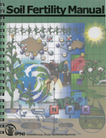
Soil Fertility Manual (Bound with cover)
The Soil Fertility Manual was first published in 1978. Since then, agriculture has seen many changes, such as adoption of conservation tillage, biotechnology, precision farming, and others. But the basic principles of soil fertility and agronomy have not changed. The underlying concepts of efficient nutrient management remain the same. The purpose of this manual is to help fertilizer dealers, crop advisers, Extension workers, consultants, teachers, and agronomists give farmers sound agronomic advice. The manual provides the reader with a working knowledge of essential soil-plant relationships, principles of nutrient management and the use of aglime, and a discussion of the unique balance of agriculture and the environment. It provides answers to common questions, and studied carefully, will motivate the reader to further learning and understanding about the fundamentals of crop production. The manual is useful as a self-study guide and can provide the basis for short courses or soil fertility workshops. It acts as a supplement to university textbooks and is an excellent resource for those preparing for the International Certified Crop Adviser (CCA) exams. 200 plus pages, 8.5 x 11 spiral bound.
Visit Store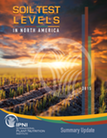
Soil Test Levels in North America: 2015 Summary Update
The 2015 Summary Update provides interpretive analysis of the results of the most recent survey of soil test levels for North America. This summary is a supplemental resource for the survey’s new web-based data access system found at http://soiltest.ipni.net. This website provides new opportunities to view, compare, and contrast soil fertility data over the four most recent surveys (2001, 2005, 2010 and 2015). The site also provides full access to a range of charts, maps, and tabular data sets.
Read NowVisit Store
Southeast Asia Newsletter
View the latest information on recent activities of the Southeast Asia Program.
Read Now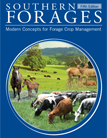
Southern Forages: Modern Concepts for Forage Crop Management - 5th Edition (2015)
Southern Forages was first introduced in 1991 and has since gained wide recognition as a practical and reliable source of information on modern forage crop management. The Fifth Edition of Southern Forages, released in February, 2015, is an even more valuable book, with extensive chapter revisions, topic updates, and other improvements.
Visit StoreHow to Order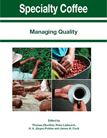
Specialty Coffee: Managing Quality
The more we searched for information on coffee quality, the more we realized that a superb cup of coffee depends on a complex of processes along the supply chain that allows little margin for error at any stage. Furthermore, as so often occurs when personal preferences and tastes are involved in defining quality, the process of producing magnificent coffees is as much an art as a science. Consequently, as we developed this book, we tried to combine hard science with art and put it into a business context: the result is a book with a wide range of styles. This book is neither a blueprint nor a recipe for specialty coffee production. Our intention is to provide information and ideas that stimulate and support creative thinking that can provide the basis for developing and adjusting the myriad processes and details of the specialty coffee supply chains that produce a multitude of coffees with distinctive traits from a diverse range of origins.
Read NowHow to Order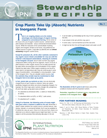
Stewardship Specifics
This series of bulletins provides condensed one page summaries of issues impacted by nutrient stewardship. Stewardship Specifics are written by IPNI staff and are intended to provide balanced reviews of current and emerging topics of discussion on crop production and environmental protection. Consumers, students, agronomists, farmers, and all who are interested in the 4R Nutrient Stewardship will find this series informative and easy to read.
Read Now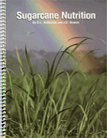
Sugarcane Nutrition (English)
This field book is intended to provide a guide to identification of essential and functional plant nutrient disorders in sugarcane. It is directed toward the sugarcane farmer, research scientist, Extension specialist, student, and consultant. Printed on synthetic paper, this book is moisture and mildew resistant. It is spiral bound for use in the field.
Visit Store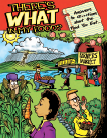
There's WHAT in My Food?
Modern consumers can choose from the most diverse and nutritious array of food products ever, and at affordable prices. There are standards and safeguards established and observed in the entire journey of food from the field to the table. However, there is also confusion and lack of understanding, with some questioning the safety and quality of various food items and production methods. There’s WHAT in My Food? is a 24-page, 8 1/2 x 11-inch publication which seeks to address some of the questions about modern crop nutrients and production practices.
Read NowVisit Store
Understanding and Managing N-P-K for Organic Crop Production
A series of three articles reprinted from Better Crops with Plant Food. The articles cover the behavior of some of the commonly used sources of nitrogen, phosphorus and potassium for organic crop production.
Visit Store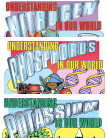
Understanding the Major Nutrients
These three booklets were created to develop an understanding and knowledge of nitrogen, phosphorus, and potassium and their vital role in our environment and crop production. The 24-page full color illustrated booklets can be used separately or together for a complete unit on the three major plant nutrients.
Read NowVisit Store
Wildlife Pocket Guide
A practical guide to forage production that provides a focus on information of interest to wildlife enthusiasts. The guide is packed with useful facts and reference lists related to plant characteristics, fertilizer and nutrients, stand establishment, animal requirements, grazing, and forage quality, including hay and silage. It was developed by the authors of the book, Southern Forages. 44 pages 3.5 x 6 in.
Visit Store